
Mineral wool for blown-in thermal insulation

Mineral wool is a lightweight, versatile insulation material that adapts well to cavities with irregular shapes or thicknesses. At Torregra, we use it for blown-in insulation projects in walls, suspended ceilings, and attics—always after inspecting the cavity and assessing which material is best suited to the home.

Solicita una visita técnica
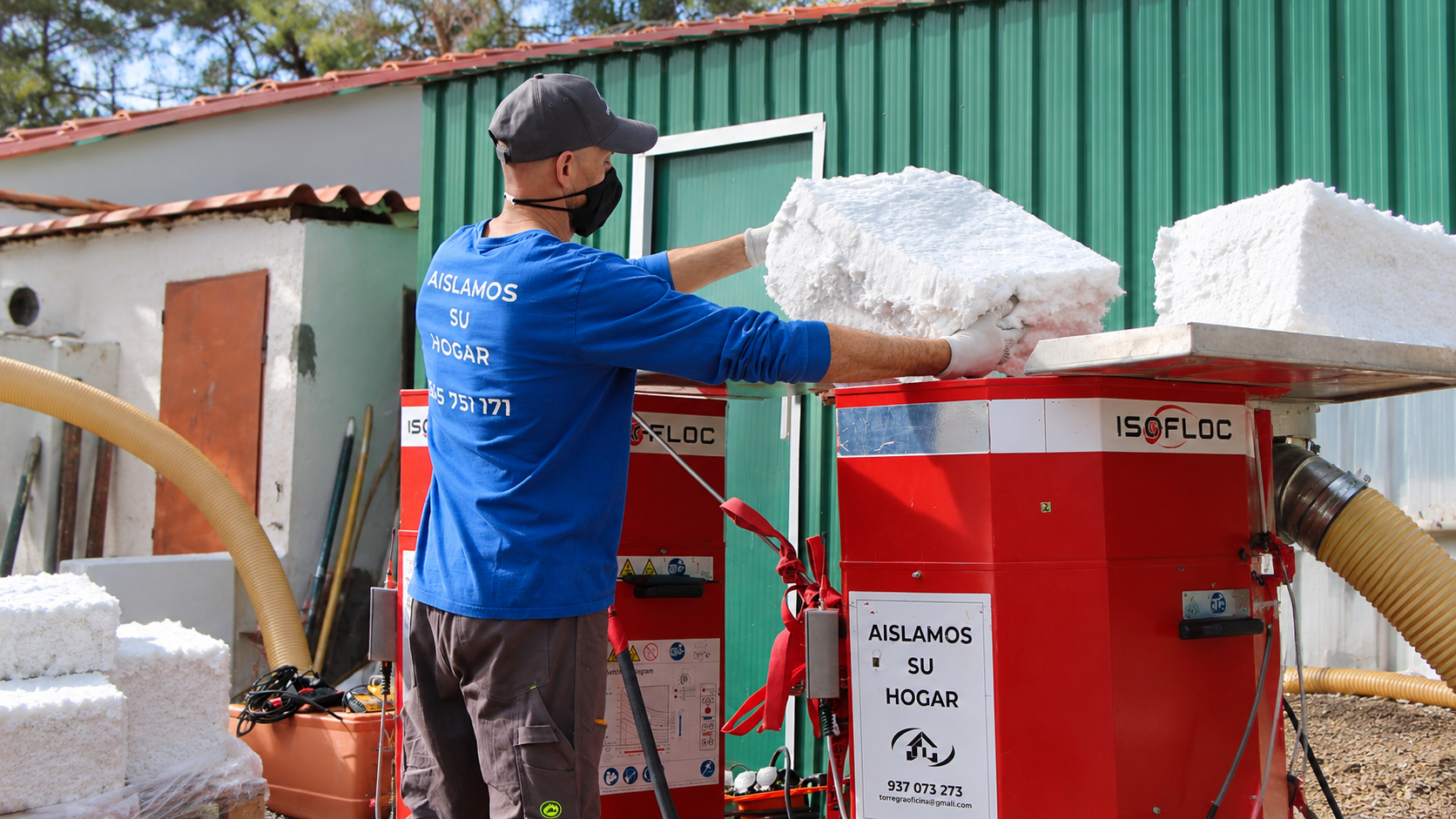
mineral wool insulation

Nuestros sistemas

What is mineral wool and what properties does it have?

“Mineral wool” is the name of the family of insulation materials made from mineral fibers, which includes rock wool and glass wool. In the context of blown-in insulation, the term “mineral wool” refers to white mineral wool, manufactured from sand and glass that are melted and spun into fibers. In loose-fill form, it is used to fill air cavities, false ceilings, and spaces beneath the roof. It is notable for its lightness and its ability to distribute evenly within the cavity. Its exact performance characteristics depend on the specific product, the available thickness, and the installation density.

Property What it provides What to keep in mind
Thermal insulation Reduces heat transfer through the building envelope. Conductivity and the final result depend on the product, thickness, and density.
Lightness Adds very little weight to the enclosure or floor slab. Especially useful for suspended ceilings and attics.
Fire performance There are blown-in insulation products classified as non-combustible. The classification of the specific product installed must always be verified.
Water behavior Certain products are water-repellent and do not retain water. It does not replace the diagnosis or repair of dampness or water infiltration.

Aislamiento térmico Insuflado

Advantages of mineral wool as blown-in insulation

How we apply blown-in mineral wool

01. Diagnóstico

We inspect the chamber with an endoscope to check its condition and determine if it is suitable.

02. Preparación

We define the access points and the installation density appropriate for the system.

03. Insuflado

We introduce the loose-fill mineral wool using pneumatic equipment until it is distributed throughout the cavity.

04. Sellado

We seal the access points and check the finish upon completion.

Nuestros sistemas

Where and when we use mineral wool

At Torregra, we use mineral wool when it suits the construction and the project’s thermal requirements. Before recommending it, we verify the existence of a suitable cavity or space and assess whether its performance characteristics are the most appropriate compared to other materials, such as rock wool.

Application Primary objective When it can be applied
Walls and facades with a cavity Improving the thermal insulation of the building envelope. When the cavity is continuous and in good condition, including cases where its thickness is irregular.
Suspended ceilings To reduce heat exchange through the upper part of the room. For use where there is an accessible space and a lightweight material is suitable.
Attics and loft spaces Improving the thermal performance of the top floor. On the floor slab, when the space under the roof is accessible.
Cavity walls Reduce heat loss in winter and heat gain in summer. When there is an accessible cavity suitable for blown-in insulation.

Preguntas frecuentes

What is mineral wool?

It is an insulation material made from mineral fibers. In the context of blown-in insulation, it typically refers to white mineral wool, manufactured from molten sand and glass.

Both belong to the mineral wool family, but they are manufactured from different raw materials. White mineral wool is lighter and adapts well to irregular cavities, while rock wool stands out for its performance when exposed to fire and high temperatures. The choice depends on the project.

Glass wool is a type of mineral wool. In the blown-in insulation sector, the terms "white mineral wool" and "glass wool" are often used to refer to the same type of material.

During installation, the fibers can cause mechanical irritation, so appropriate protective equipment is used. Once blown in, the material remains confined within the cavity.

There are mineral wool products for blown-in insulation that are classified as non-combustible. The classification should always be verified in the specific product's technical data sheet.

Is mineral wool suitable for your home?

We inspect the air cavities and select the insulation based on your home's construction and actual needs.