
At Torregra we carry out blown thermal insulation in senior residences and day centers throughout Catalonia, planning each intervention to minimize inconvenience and maintain the activity of the center.
Request a technical visit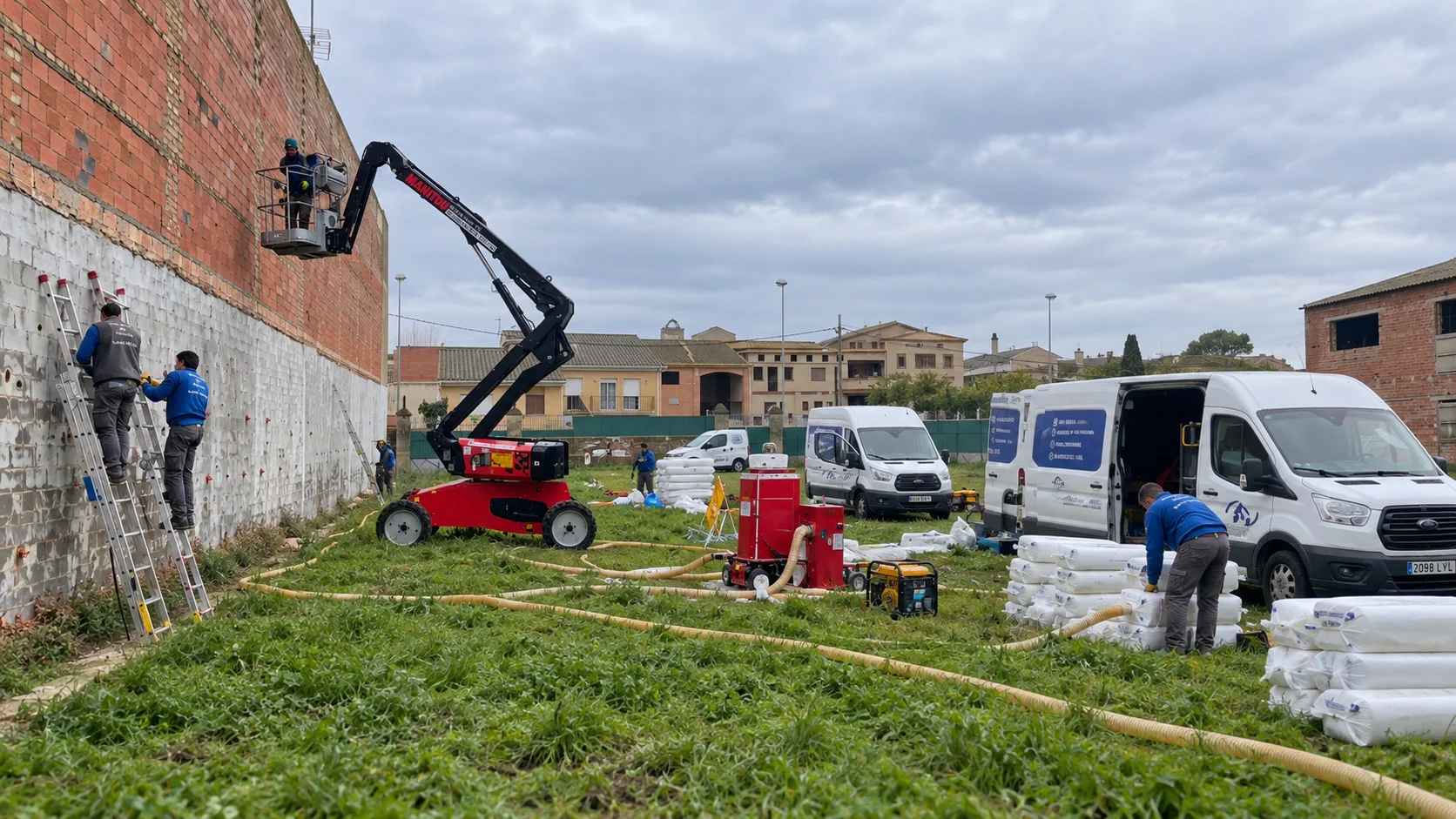
Thermal insulation in Residences
Older people can be especially vulnerable to both cold and heat. The WHO Guidelines on Housing and Health highlight the importance of maintaining adequate thermal conditions and improving the thermal performance of existing buildings.
01.
Recommended minimum indoor temperature during the cold season for the general population.
02.
Older people may need a minimum temperature above 18°C.
03.
Older people are among the groups especially vulnerable to high temperatures.
04.
The WHO includes thermal insulation among the interventions to improve the thermal conditions of housing.
*Source: OMS, Guidelines on Housing and Health (PAHO Spanish edition, 2022).
When the building envelope is inadequate, maintaining comfortable indoor conditions can require more heating or cooling and create significant differences between rooms, floors, or orientations. Improving insulation can help reduce these heat exchanges and facilitate more stable thermal control.
Thermal insulation in Residences
Each space within a residence or care facility has different thermal needs depending on its orientation, use, and exposure to the outside. Therefore, before proposing an insulation solution, we analyze the building envelope and the areas with the greatest impact on the comfort of residents and staff.
If the residence is part of a larger or shared building, also check out our thermal insulation service for large buildings.
Thermal insulation in Residences
The choice of material depends not only on its insulating capacity. In a residence, we must consider the cavity configuration, thermal and acoustic performance, the system's fire resistance, and the specific requirements of the building.
The CTE also establishes specific safety conditions for centers whose occupants need help to evacuate.
Thermal insulation in Residences
In a care home, planning is just as important as the intervention itself. When the building is suitable for insulated walls, we can organize the work by facades, floors, or zones and coordinate schedules and access with management and the care team.
The possibility of keeping all areas in use depends on the scope, access, and security conditions of each center.
01.
We organize the work by facades, floors or wings according to the needs of the center.
02.
We agreed on the work schedules with management and the care team.
03.
We define intervention and circulation points to reduce discomfort and risks.
04.
We seal the access points and check each area before moving on to the next.
Aislamiento térmico en Residences
In a care home, every action requires coordination to adapt to the functioning of the center and minimize inconvenience to residents, staff and visitors.
That's why we follow a defined process from the initial study to the execution of the isolation.
We inspect facades, roofs, and chambers to check if blowing is feasible.
We define scope, material, access and budget for the management, property or managing entity.
We coordinate zones, schedules and phases with the team responsible for the residence.
We inject where necessary, seal the access points, and check each area before moving forward.
Thermal insulation in Residences
Improving the thermal insulation of a residence helps maintain a more stable temperature, increase the comfort of residents and staff, and reduce the building's energy consumption.
Thermal insulation in Residences
In a care home, insulation must be considered in light of both the building’s characteristics and the center’s daily operations. We study each project before defining the solution and coordinate the intervention to adapt it to your needs.

We studied the facades and the roof, checked if the injection was feasible and prepared an action plan by zones coordinated with the center.