
Thermal insulation in Hotels

At Torregra we carry out blown thermal insulation in hotels, hostels and tourist accommodations throughout Catalonia, studying each building to intervene with the minimum interference in its activity.

Request a technical visit
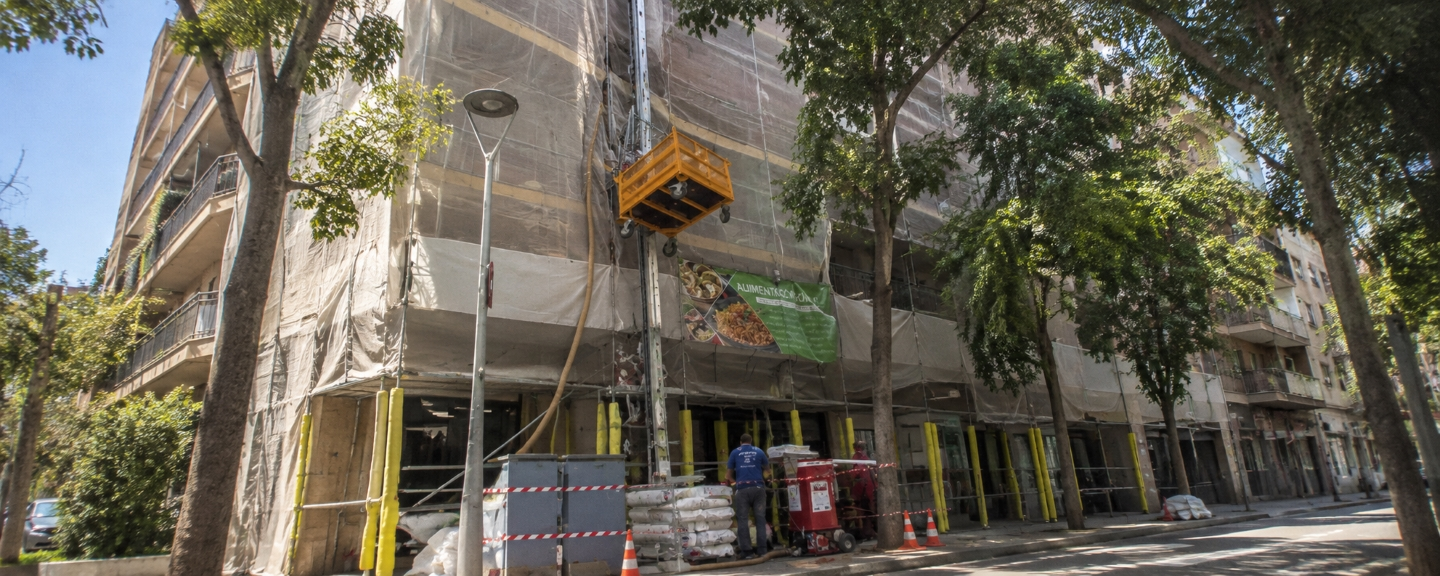
Thermal insulation in Hotels

Why isolation matters in a hotel

In accommodation, the comfort of the rooms directly influences the guest experience and the functioning of the building.

Improving the building envelope can help stabilize the temperature, reduce certain noise transmissions, and decrease the demand for air conditioning when the enclosure is part of the problem.

01.

Temperature

Rooms with temperature differences depending on orientation, floor or exposure.

02.

Noise

The enclosure and certain interior divisions can influence acoustic comfort.

03.

Energy demand

A better insulated building envelope can reduce heating and cooling needs.

04.

Guest experience

Thermal and acoustic comfort are part of the perceived quality during the stay.

Thermal insulation in Hotels

What areas do we study in a hotel?

If the accommodation is part of a shared building or a larger complex, the study can also be considered from our thermal insulation service for large buildings.

Building area What we checked
Room facades We check if there is an air chamber suitable for improving the thermal performance of the enclosure.
Top floor and roof We study the upper areas, especially when they have greater thermal exposure.
Room partitions We assess the configuration of the enclosure and the possibilities for action according to the characteristics of the space.
Common areas We inspect lounges, reception areas, restaurants, or other spaces when their enclosures have usable cameras.

Thermal insulation in Hotels

How we choose insulation
for a hotel

The choice of insulation does not depend solely on the type of accommodation.

In hotels and hostels, classified in the CTE as Public Residential use, we assess the thermal and acoustic performance of the system, the fire behavior of the product, the configuration of the chamber and the specific requirements of the project.

Criteria What we review Why it matters
Fire performance Certified product performance and applicable building requirements. The accommodation must comply with the safety conditions established for its use and design.
Thermal performance Conductivity, available thickness, and continuity of the fill. Determines the thermal improvement that can be achieved in the existing cavity.
Acoustic performance Complete construction system, materials, and potential lateral transmission. The acoustic result does not depend solely on the blown-in insulation.
Camera compatibility Thickness, condition, accessibility, humidity, and obstacles. Confirm if blowing is feasible and which product can be used.

Thermal insulation in Hotels

We plan the work to reduce the impact on activity

Blown-in insulation is a minimally invasive intervention when suitable cavities exist. Implementation can be organized by floor, wing, or zone and coordinated with hotel occupancy.

The possibility of keeping the establishment operational during the work depends on access, the scope of the action and the conditions of each building.

01.

Off-season

It can facilitate larger-scale actions with less occupancy.

02.

By plants or wings

The intervention can be organized by zones to limit the affected rooms.

03.

Coordinated schedules

The work is scheduled with management according to the establishment's operations.

04.

Exterior access

When the facade and access allow it, work can be done from the outside without entering all the rooms.

Aislamiento térmico en Hotels

How we work with hotels

We work with independent hotels, hotel chains, and management companies, tailoring each project to the specific needs and operations of the establishment.


When a project involves multiple rooms, common areas, or the entire building, we approach the intervention with the same technical and planning criteria we apply to our thermal insulation services for large buildings.

01. Technical study

We inspected accessible chambers and entry points to check feasibility.

02. Proposal

We define zones, materials, scope, and budget according to the characteristics of the establishment.

03. Phased Plan

We coordinate schedules, access and work areas with the accommodation management.

04. Inflation and sealing

We carried out the intervention, sealed the access points, and checked the finishes.

Thermal insulation in Hotels

Benefits of thermal insulation in Hotels

Improving the thermal insulation of a hotel helps maintain a more stable temperature, increase the comfort of guests and workers, and reduce energy consumption.

Thermal insulation in Hotels

Why Torregra for your hotel?

In a hotel, improving insulation requires planning that takes into account both the building’s characteristics and its daily operations. That’s why we study each project before defining the solution and organizing the intervention.

  • We plan by floors, wings or zones to reduce the impact on the activity of the accommodation.
  • Preliminary study of the cameras and access points before preparing the budget.
  • Blown-in insulation can improve thermal performance and, depending on the enclosure and material, also acoustic performance.
  • Own team based in Viladecans and service throughout Catalonia.

Frequently Asked Questions

Is it possible to isolate a hotel without closing the entire establishment?

In many cases, it is possible to plan by floors, wings, or zones to limit the affected areas. The continuity of activity depends on access, safety, the scope of work, and the building's configuration, and is therefore defined in the preliminary study.

The off-season usually allows for a more extensive intervention, but it's not essential. In establishments with stable occupancy, we can organize the work in phases and coordinate the schedule with management.

It can be improved when the separation between rooms has a suitable cavity and the construction system allows for blown-in insulation. The acoustic result depends on the overall enclosure, lateral sound transmission, and the materials used, so we review the solution before proposing it.

Improving the building envelope can help reduce some of the outside noise, but windows, roller shutter boxes, junctions, and other factors also play a role. If the main problem isn't in a cavity suitable for blown-in insulation, we'll indicate this in the technical report.

It depends on the building's construction. Many traditional stone walls are solid and don't have a cavity suitable for blown-in insulation, although other areas of the building, such as certain roofs or enclosures, may have usable spaces. We check each case individually.

Do you want to improve the thermal insulation of your hotel?

We studied the areas of the building that could be suitable for blowing and proposed a phased intervention adapted to the operation and occupancy of the establishment.