
Blown-in cellulose insulation

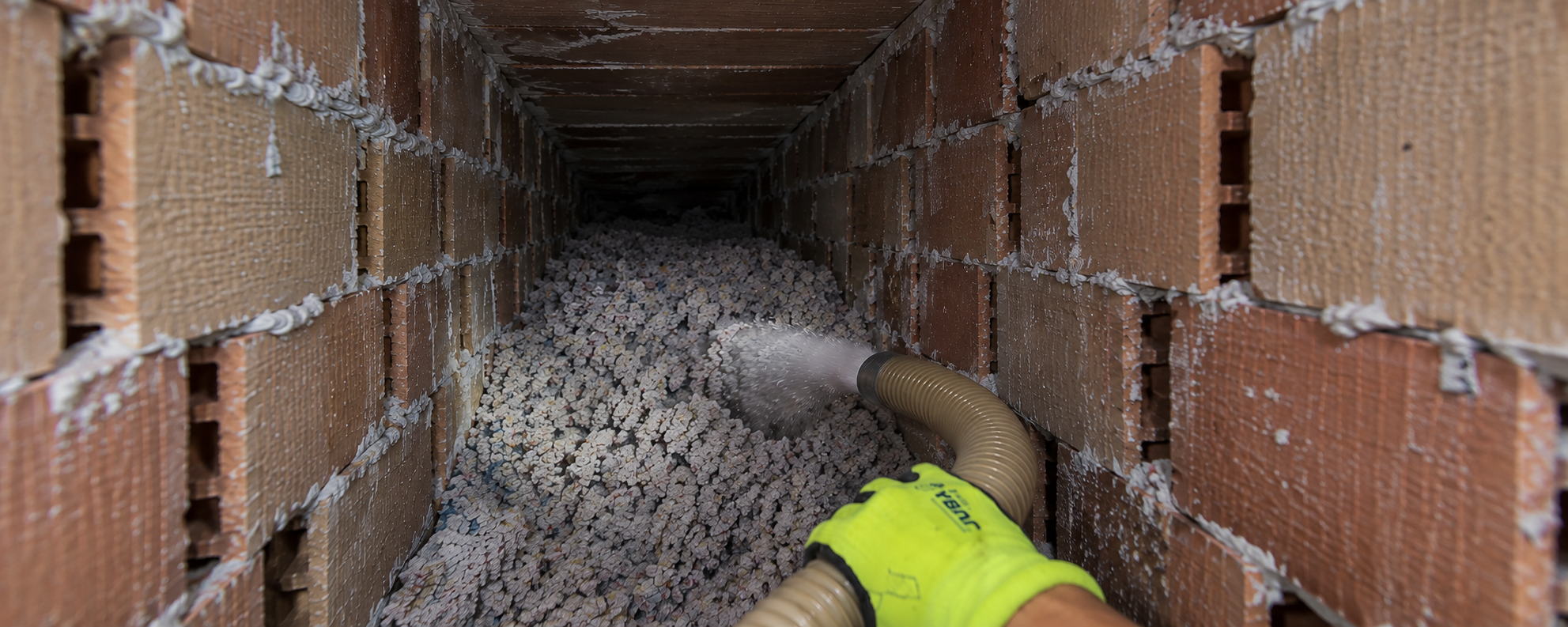
Cellulose is an insulation material made primarily from recycled paper fibers. At Torregra, we use it for specific blown-in thermal insulation projects in attics, false ceilings, and cavity walls—always after inspecting the space and assessing which material is best suited to the home.

Request a technical visit
Our systems

What is cellulose and what properties does it have?

Cellulose insulation is manufactured from recycled paper fibers treated with mineral additives to enhance performance characteristics such as fire resistance and durability. In loose-fill form, it can be blown into wall cavities, suspended ceilings, and under-roof spaces. Its exact performance characteristics depend on the product, available thickness, installation density, and the configuration of the building envelope.

Property What it provides What to keep in mind
Thermal insulation Reduces heat transfer through the building envelope. Conductivity and the final result depend on the product, thickness, and density.
Summer performance Its density can help delay heat gain in certain building envelopes. The outcome depends on the overall construction assembly, particularly in roofs and top-floor levels.
Fire behavior Mineral additives improve its reaction to fire. It is not a non-combustible material; the classification of the specific product must be verified.
Behavior regarding moisture It can withstand a certain level of ambient humidity under normal conditions of use. It must not be installed to conceal leaks, rising damp, or other moisture-related issues.

Blown-in thermal insulation

Advantages of cellulose as blown-in insulation

How we apply blown-in cellulose

01. Diagnosis

We inspect the chamber or space to check its condition and ensure it is suitable.

02. Preparation

We define the access points and the installation density appropriate for the system.

03. Inflated

We introduce the loose-fill cellulose using pneumatic equipment until it is distributed throughout the designated space.

04. Sealing

We seal the access points and check the finish upon completion.

Our systems

Where and when do we use cellulose?

At Torregra, we use cellulose when it suits the construction and the project’s thermal requirements. Before recommending it, we verify that the space is suitable, that there are no moisture issues, and that its performance compares favorably to other materials such as rock wool or mineral wool.

Application Primary objective When it can be applied
Attics and loft spaces Improving the thermal performance of the top floor. When the space under the roof is accessible and in suitable condition.
Suspended ceilings Reducing heat exchange through the ceiling. When there is an accessible space and the suspended ceiling allows for intervention.
Paredes y fachadas con cámara Mejorar el aislamiento térmico del cerramiento. Cuando la cámara está seca, tiene continuidad y es apta para recibir el material.
Roofs or roof structures with accessible space Improving insulation in upper areas. When the construction design allows for proper and controlled installation.

Frequently Asked Questions

What is cellulose insulation?

It is an insulation material made primarily from recycled paper fibers treated with mineral additives. It is used in loose-fill form to improve thermal insulation in wall cavities, suspended ceilings, and under-roof spaces, provided the construction is suitable.

Mineral additives improve its reaction to fire, but cellulose is not a non-combustible material. The classification should always be verified in the specific product's technical data sheet.

It can handle a certain level of ambient moisture under normal conditions, but it should not be installed to conceal leaks, rising damp, or other structural issues. That is why we first check the condition of the space.

Installation density is key to limiting settlement. That is why we tailor the application to the type of chamber or space and the system being used.

It depends on the construction. Cellulose and mineral wool differ in terms of weight, moisture behavior, fire reaction, and installation method. At Torregra, we select the material after inspecting the wall cavity and assessing the home's thermal requirements.

Is cellulose suitable for your home?

We inspect the air cavities and under-roof spaces, and select the insulation based on your home's construction and actual needs.